
“Did you know that the average Indian newborn receives more than thirty suggestions before the parents finally settle on a name?” the aunt whispered, eyes glittering with the kind of conspiratorial glee usually reserved for gossip about the neighbor’s new car. The room fell silent, except for the faint hum of a ceiling fan that seemed to be auditioning for a role in a Bollywood drama.
Hook: The Unwritten Rulebook
Imagine a bustling kitchen in Delhi, where spices swirl like gossip and the aroma of cumin battles the scent of fresh paint on a nursery wall. Here, Priya, a first‑time mother-to-be, is perched on a stool, clutching a notebook titled “Names for the Future”—a title that sounds suspiciously like a manifesto for a cult. She flips through pages of Sanskrit, Sanskritised English, and the occasional anglicised Punjabi, muttering, “If only I could find something that sounds like a lullaby and doesn’t sound like a corporate rebrand.”
Setup: The Cast of Characters (and Their Names)
Enter the supporting troupe: Uncle Raj, who insists on resurrecting his great‑grandfather’s name, “Vijayendra,” because “it screams royalty”; Aunt Meera, who suggests “Aadhya” because it means “first”—as if the baby’s destiny should be to beat everyone at the start line of life. And then there’s the internet, a bottomless well of forums where strangers argue over whether “Aryan” is a name or a political statement. All of them converge on one common battlefield: the quest for a name that is meaningful, easy to pronounce, and rooted in Indian culture, without sounding like a brand of detergent.
Rising Action: The Naming Marathon
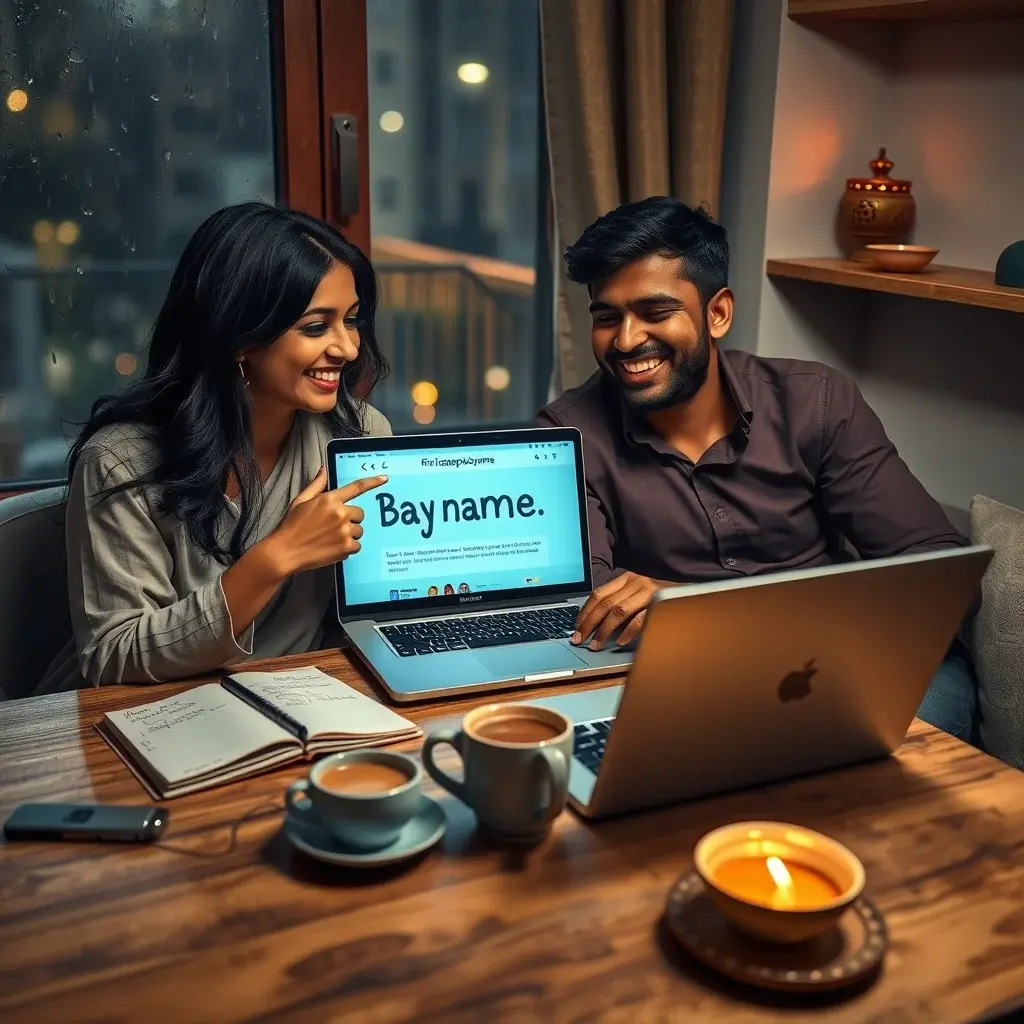
Priya’s husband, Arjun, pulls up a spreadsheet titled “Potential Names (Do Not Use).” It’s a colorful grid of columns: Meaning, Pronunciation Score, Cultural Weight, and a dreaded one labeled “Potential for Teasing.” He points to “Lakshya,” meaning “goal,” and sighs, “We already have a goal—surviving the first three months of parenthood.” The couple scrolls through First Step Baby, a site that promises to match names with personality traits, as if a baby’s future can be coded into an algorithm. The irony isn’t lost on them; they’re essentially letting a server decide whether their child will be a poet or a software engineer.
Meanwhile, the kitchen timer dings, announcing that the masala is ready. The scent of turmeric wafts through the room, reminding Priya that while she’s busy naming the future, the present still demands a perfectly spiced dal. She jokes, “If I can’t find a name that rolls off the tongue, at least the dal should.” The tension builds as the clock ticks, and the list of names grows longer, each entry more elaborate than the last.
Key Insights: Etymology Meets Everyday Life
Here’s the kicker: many Indian names are not just labels; they are tiny etymological time machines. Take “Ishaan,” derived from the Sanskrit “Īśāna,” meaning “the sun” or “lord of wealth.” It’s easy on the tongue, carries a celestial vibe, and won’t be misheard as a grocery item. Or “Mira,” a name that means “ocean” in Sanskrit and “wonderful” in Latin—perfect for parents who love a good cross‑cultural pun.
Pronunciation is another battlefield. A name like “Kshama” (forgiveness) looks impressive on paper but can become a tongue‑twister faster than you can say “ksh”. The trick is to find that sweet spot where the phonetics are as smooth as a well‑tempered sitar string. Websites like First Step Baby often provide phonetic guides, but the real test is saying the name aloud while juggling a baby in one arm and a steaming pot in the other.
Culture, of course, is the invisible thread that ties everything together. Names rooted in mythology, like “Sita” or “Rama,” carry centuries of narrative weight. Yet, they can also invite unwanted comparisons to epic love stories—imagine a toddler being asked if he/she is the reincarnation of a goddess at a birthday party. The solution? Opt for names that hint at heritage without demanding a full‑blown saga. “Anaya” (caring) or “Rohan” (ascending) strike that balance nicely.
Resolution: The Name That Finally Clicked
After hours of debate, a sudden gust of monsoon rain rattles the windowpanes, and Priya looks up from her notebook. She spots a tiny card on the kitchen table—an old birthday invitation from her own childhood, addressed to “Aarav,” meaning “peaceful”. The name feels like a warm blanket on a chilly night: familiar, comforting, and surprisingly easy to say. She whispers, “Aarav,” and the whole family exhales as if a collective weight has been lifted.
Arjun smiles, “It’s perfect. It means ‘peaceful,’ which is exactly what we need when the diaper changes start at 3 a.m.” The aunt nods, the uncle grudgingly admits the name won’t clash with his own, and the internet—well, the internet will update its database tomorrow.
Takeaway: Naming Isn’t a Test, It’s a Celebration
So, dear expectant parents, remember that the perfect name is less about ticking boxes and more about capturing a feeling. Dive into etymology, but don’t let it drown you. Choose something that rolls off the tongue like freshly churned ghee, and that honors your cultural roots without demanding a lecture at every family gathering. And when in doubt, let a trusted site like First Step Baby be your compass, not your commander.
In the end, the name you pick will be the first story you tell your child—a story of love, humor, and a dash of sarcasm. And if the baby ever asks why they’re called “Aarava,” you can proudly answer, “Because we wanted peace, and we couldn’t find it in the grocery aisle.”